
Our projects
Discover how Amber HS is working to improve your wellbeing and quality of life.
Key features
The analysis of a liquid biopsy using Fourier-transform infrared (FTIR) spectroscopy provides the sample’s molecular “fingerprint”.
This fingerprint is unique to each individual and shows alterations resulting from changes in their state of health; in other words, it enables the ultra-early detection of the onset of disease.
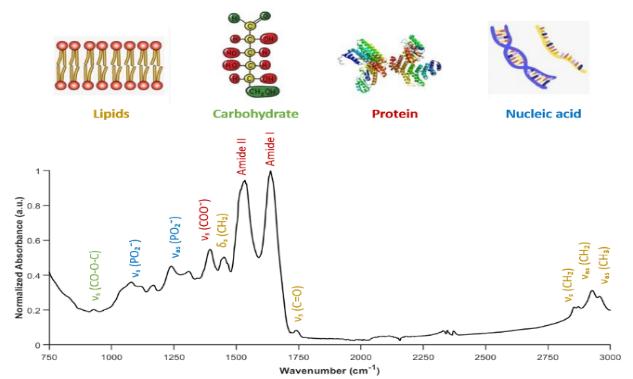
SCANHEALTH focuses on the ultra-early detection of colorectal, breast, and lung cancer from a single analysis. The project evaluates the use of plasmonic nanoparticles to enhance the signal from molecules of key interest, in order to identify the presence of the target illnesses. SCANHEALTH assesses the use of plasmonic nanoparticles to increase the signal of molecules of greatest interest to identify the presence of target diseases.
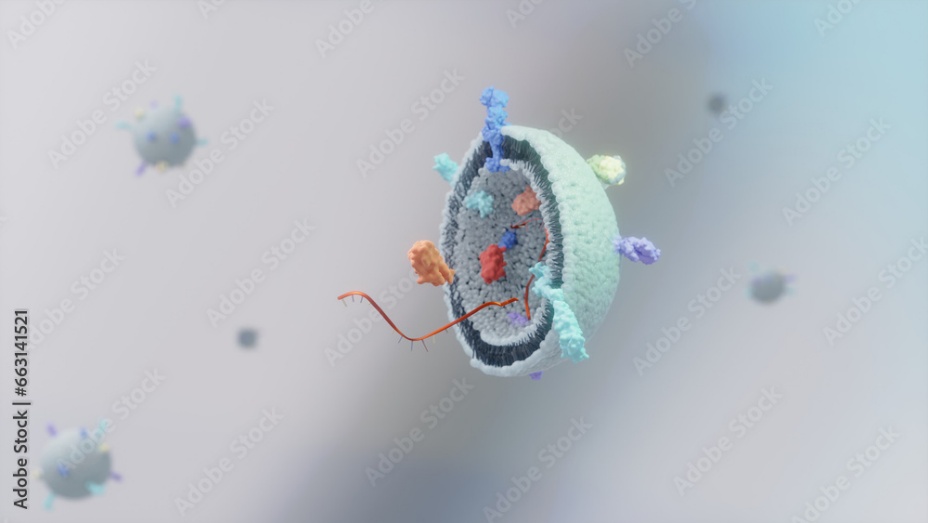
To maximise disease detection capability, SCANHEALTH analyses extracellular vesicles (EVs) isolated from liquid biopsies. EVs are like microscopic parcels that cells create and release, either to communicate with each other or to manage their waste products. Extracellular vesicles are like microscopic packets that cells make and release outwards to communicate or manage their waste.
Applied technologies
Key features
The integration of Raman spectroscopy with FTIR is proposed, using advanced data fusion techniques, with the aim of increasing the robustness, sensitivity, and specificity of the VHIGIA system.
This combination allows the complementarity of the two spectroscopic techniques to be exploited, capturing a broader range of molecular and structural information from biological samples.
Raman spectroscopy is based on the inelastic scattering of light. When a coherent monochromatic light beam—typically a laser in the visible or near-infrared range—is directed onto a sample, most photons undergo elastic (Rayleigh) scattering, retaining their original energy. However, a very small fraction (~1 in 10⁶–10⁸) of photons interacts with the vibrational modes of the molecular system, which results in an energy change that translates into a frequency shift in the scattered photon. These shifts are expressed in units of wavenumber (cm⁻¹) and constitute the Raman spectrum, which is characteristic of the specific molecular vibrations of the chemical bonds present in the sample. When a beam of coherent monochromatic light, typically a laser in the visible or near-infrared range, strikes a sample, most of the photons undergo elastic scattering (Rayleigh), maintaining their original energy. However, a very small fraction (~1 in 10⁶-10⁸) of the photons interacts with the vibrational modes of the molecular system, resulting in a change in energy that translates into a shift in the frequency of the scattered photon. These shifts are expressed in units of wavenumber (cm⁻¹) and constitute the Raman spectrum, characteristic of the specific molecular vibrations of the chemical bonds present in the sample.
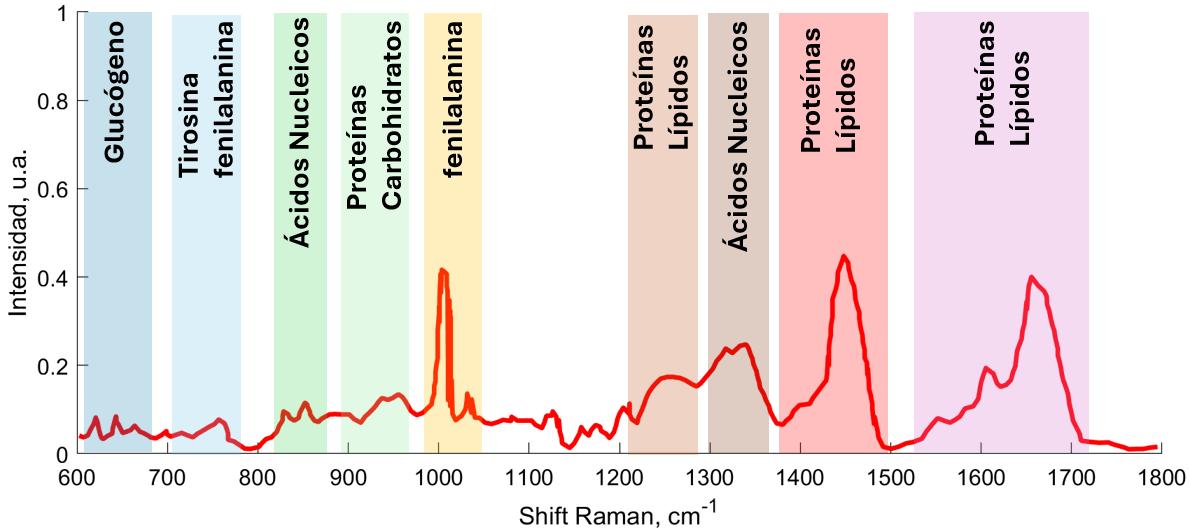
The combination of FTIR and Raman, properly processed using intermediate- or deep-level data fusion techniques, will significantly improve VHIGIA’s discriminative capability in disease screening, while maintaining the principles of non-invasive, non-destructive analysis and low operating cost. To preserve these properties, the instrumental configuration of the Raman systems will be carefully evaluated, as well as the need for minimal sample conditioning (for example, using optimized reading cells or fluorescence suppression techniques), in order to guarantee viable clinical applicability.
3+
Detectable cancer types
2
Active research projects
100%
Non-invasive
Frequently Asked Questions
SCANHEALTH is an early detection system for multiple types of cancer and chronic diseases from a single blood sample.
It uses FTIR spectroscopy, plasmonic resonance, and artificial intelligence (AI) to analyse the molecular ‘fingerprint’ of the blood.
Currently, SCANHEALTH can detect multiple types of cancer and chronic diseases. We are constantly expanding this list. We are constantly expanding the list.
SCANHEALTH has an accuracy, specificity, and sensitivity exceeding 95%.
No, SCANHEALTH only requires a small blood sample, which makes it a non-invasive test.
No, SCANHEALTH is a complement to conventional medical examinations and should not replace them.